Advertisement
2. Historical Accounts of Blood Rain
Advertisement
Blood rain has fascinated, terrified, and supercharged people throughout history. Many times, ancient societies saw this phenomena as a sign from the gods or a portent of death. Blood rain has been recorded for thousands of years, and stories of it abound in many different societies all around.
Written in the eighth century BCE, Homer's Iliad is one of the first known examples of blood rain. Homer tells Zeus in the epic poem making it rain blood an omen of death. This literary allusion captures the ancient Greek view that such odd weather patterns were divine communications.
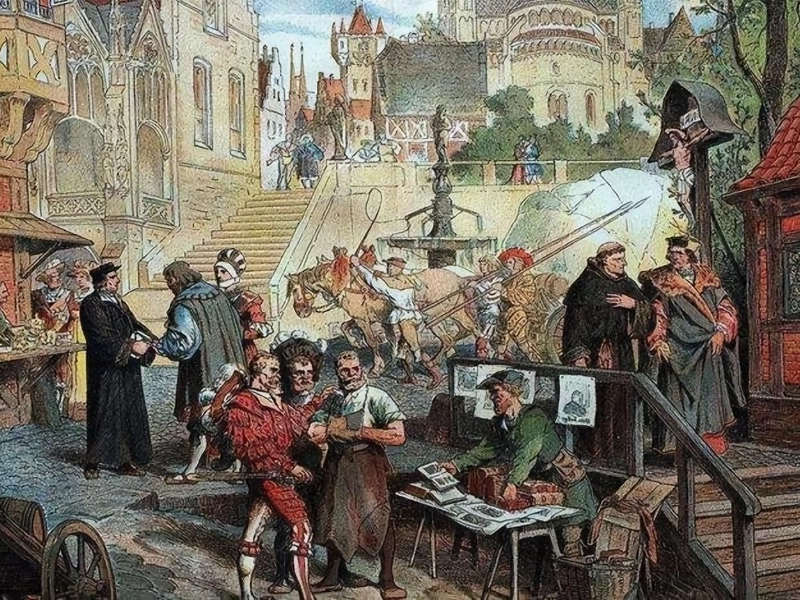
Blood rain was sometimes regarded as a supernatural event in mediaeval Europe. Stories from the era document events of red rain occurring all throughout the continent. Many times, these incidents were seen as presage of war, famine, or other disasters. Lack of scientific knowledge at the time resulted in general superstition and dread about these events.
As scientific study grew during the Renaissance, several researchers started looking for natural causes for blood rain. The Jesuit priest Athanasius Kircher proposed in 1608 that airborne microscopic organisms might be the source of the red pigment. Although his particular hypothesis was wrong, it marked a change towards logical justifications for the phenomena.
Recent times have seen recorded instances of blood rain occurring all throughout the world. Red rain fell in Kerala, India, in 2001, generating debate and scientific interest as well. Though this idea was eventually disproved, some researchers first suggested the crimson particles in the rain were alien in origin.
The Kerala episode is especially remarkable since it continued for several months and only sometimes featured red rain. This long period let for thorough scientific investigation including chemical analysis of the rain samples. The results revealed that rather than desert dust as in usual blood rain episodes, the crimson colour was caused by spores from locally abundant terrestrial algae.
Charles Darwin provides still another important historical narrative. Darwin saw dust raining on the HMS Beagle's deck close to the Cape Verde Islands during his 1833 journey. Later on, he gathered samples and wrote a study on the phenomena, therefore advancing scientific knowledge of airborne dust movement.
As meteorological observing methods developed in the 20th century, more exact records of blood rain incidents were accessible. For example, "blood rain" dropped in southern Italy in March 1901, clearly staining clothing. At the time, scientific study properly linked the colour to fine sand from the Sahara Desert.
These historical narratives show how for millennia human imagination has been enthralled by blood rain. They also show how human knowledge is developing from supernatural explanations to scientific investigation. Though its occurrence still has some mystery and fascinates people all around the world, today we know the processes underlying blood rain.
For climate researchers, previous blood rain incidents offers important information. Through record analysis of prior events, scientists can monitor over time variations in atmospheric dust levels and circulation patterns. This data helps us to better grasp long-term climate changes and the effects of human activities on world dust movement.