Advertisement
3. Atmospheric Conditions Leading to Blood Rain
Advertisement
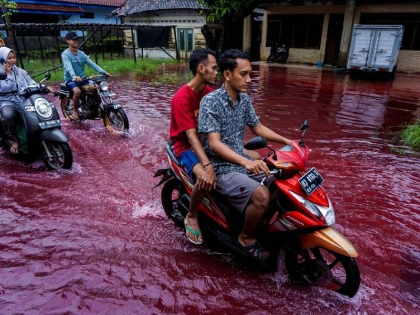
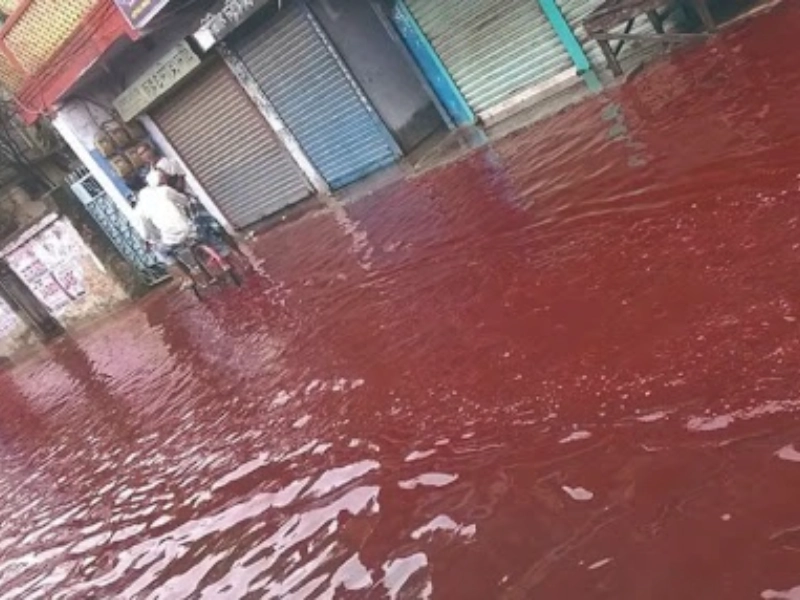
Blood rain forms under the alignment of a particular set of meteorological variables. Knowing these factors enables meteorologists to forecast where and when blood rain might strike. The mechanism consists of a complicated interaction among precipitation systems, dust sources, and wind patterns.
The first absolutely vital component is a source of fine dust or sand particles. Common sources are desert areas as the Middle Eastern Arabian Desert or the Sahara in North Africa. Strong winds can readily raise the large stretches of loose, fine-grained debris found in these arid regions into the air. Rich in particles like iron oxide, the makeup of this dust helps to explain blood rain's unique hue.
Long distance dust particle transportation depends critically on wind patterns. For the Sahara, for instance, a meteorological system called the Saharan Air Layer (SAL) can move dust over the Atlantic Ocean. Usually forming between late spring and early fall, this layer of dry, dusty air can stretch from the African coast to the Caribbean, the Gulf of Mexico, and areas of North America.
These dust-laden air masses must run across rain-producing weather systems if crimson rain is to occur. This frequently results from the interaction of frontal systems or convective storms with dusty air. As condensation nuclei, the dust particles surround water droplets so they may develop. The size and chemical makeup of the dust particles determine the efficiency of this process.
The look of the rain depends on the concentration and size of dust particles. While tiny particles can remain suspended for longer durations and travel greater distances, larger particles usually drop out of the air more rapidly. The degree of the colour of the rain depends on the particle concentration. More vibrant colours follow from higher concentrations.
Furthermore important is atmospheric stability. Whereas unstable conditions can mix dust particles throughout several layers, stable conditions can trap dust particles at specific atmospheric levels. This influences the interactions among the particles with cloud forms and precipitation. Inversions, in which a layer of warm air lies atop cooler air, can trap dust and pollutants close to the ground, hence perhaps enhancing the impact of blood rain.
Still another crucial consideration are humidity levels. Under particularly dry conditions, the dust could drop as dry deposition without combining with rain. On the other hand, high humidity might induce the dust particles to gather together, therefore altering their aerodynamic characteristics and interaction with water droplets. The perfect conditions for blood rain usually consist in a mix between wet air able of generating precipitation and dry, dust-filled air.
The frequency and spread of blood rain episodes could be under influence of climate change. Some areas are becoming increasingly desertified as global temperatures rise, thereby generating additional possible dust sources. Variations in world wind patterns might potentially influence dust movement around the earth. Certain research speculate that increasingly severe and frequent dust storms brought on by climate change could raise the probability of blood rain events.
Rainfall and dust movement have critical timing. Blood rain results from rain falling into an air mass covered in dust washing away the particles. If the dust shows up after the rain has stopped, though, it might just settle on surfaces as dry deposition. To project possible blood rain episodes, meteorologists employ advanced models combining information on wind patterns, dust sources, and precipitation forecasts.
Through research of these atmospheric factors, scientists can raise their capacity for blood rain event prediction. Apart from meteorological uses, this knowledge helps one to grasp the worldwide movement of minerals and contaminants as well as their possible effects on ecosystems and human health. It also offers understanding of more general atmospheric dynamics and how they might be evolving in response to changes in the global temperature.