Advertisement
5. Myths and Misconceptions About Blood Rain
Advertisement
Blood rain still surrounds myths and prejudices notwithstanding scientific answers. Often resulting from past superstitions, ignorance of science, or sensationalised media coverage, these incorrect ideas might Promoting accurate awareness on this natural occurrence depends on dispelling these false beliefs.
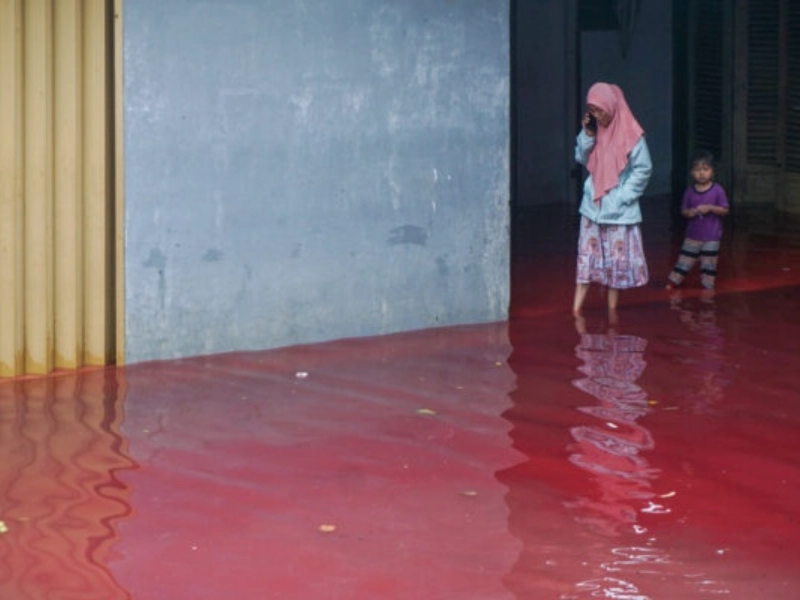
Blood rain is sometimes mistakenly understood as literal blood pouring from the sky. This view originated in religious books and old folklore where blood rain was considered as a divine sign or penalty. Actually, not biological material but dust particles are what give the red colour. The name "blood rain" is just a descriptive one based on appearance, not content. Scientific examination of blood rain samples repeatedly reveals that the reddish hue of the water results from mineral particles, mostly iron oxides.
Another myth holds that blood rain poses a threat to human health either toxically or otherwise. Although some people, particularly those with pre-existing diseases, may find the dust in blood rain aggravating their respiratory problems, the rain itself is not intrinsically dangerous. Though the mineral content may cause a disagreeable taste, the water is safe to touch and, generally speaking, even safe to drink. Large amounts of blood rain water are not advised without appropriate treatment, though, since the dust might transport contaminants or bacteria.
Blood rain, according to some, signals approaching catastrophe or the end of the world. Similar incidents of blood rain prior to important historical events have strengthened this myth. Still, there is no scientific data connecting blood rain to upcoming disasters. It is not a prophetic indication; rather, it is a natural meteorological event. Not supernatural forces or cosmic alignments, but climatic conditions define the timing of blood rain events.
One common belief is that blood rain only happens in tropical or desert areas. Although it's more common in these places because of their proximity to dust sources, under the correct climatic conditions blood rain can occur anywhere in the world. Blood rain reports from the UK and Northern Europe show its worldwide character. The main determinant is not the local temperature but the movement of dust particles from far-off sources via atmospheric circulation patterns.
Some wrongly think that blood rain is a modern occurrence brought on by pollution or climate change. Although these elements could affect its frequency or distribution, historical records going back thousands of years show that blood rain has been occurring naturally for millennium. Natural processes of wind erosion and dust movement, which have been continuous on Earth's history, drive the phenomena mostly.
Blood rain is said to constantly show brilliant red colour. Actually, the colour might vary based on the composition and dust particle concentration from pale pink to dark brown. Though the true colour is more orange or brown, the term "blood rain" is sometimes used sensually. Factors including the concentration of particles in the air, the mineral makeup of the dust, and the rainfall influence the color's intensity.
Another myth is that blood falls as red droplets. Usually, the rain seems regular while it falls; it only shows its colour when it gathers the ground. The dust particles are so little that they hardly change the way individual raindrops seem. Blood rain so usually goes unnoticed until it gathers on the ground, buildings, or automobiles.
Some say volcanic eruptions or wildfire ash causes blood rain. Although these phenomena can produce discoloured rain, actual blood rain is especially brought about by desert dust. varied phenomena—often with varied characteristics—are produced by volcanic ash and wildfire particles. Ash from volcanoes, for example, usually produces deeper, greyish precipitation; smoke from wildfires can provide a yellowish or brownish colour.
Blood rain stains everything it comes into contact with, is a myth. Although the dust leaves behind, it usually is easy to clean and causes no permanent staining. Common cleaning techniques allow one to wash the minerals in blood rain. On porous surfaces or fabrics, however, the small particles may call for more intensive cleaning to be totally removed.
Some individuals believe that blood rain invariably brings thunderstorms or strong winds. Actually, it can happen from small drizzles to heavy downpours, in any kind of weather. Not the degree of the precipitation, but the presence of dust in the atmosphere determines the main influence.
A fascinating belief holds that blood rain can cause animals or people to turn red. This is simply untrue. The hue has no effect on living entities; it solely influences surfaces where the rain falls. Any reddish look on fur or skin would result from the dust settling on the surface, not from any alteration in the organism itself.
Another myth is that blood rain is a localised phenomena limited to particular places. Actually, it can cover really vast distances—sometimes hundreds of km. The magnitude of the dust cloud and the meteorological systems transporting it determines the scope of the impacted area.
Blood rain has healing or magical qualities, some people think. Scientifically, this superstition has no foundation. Although the mineral content of blood rain could have certain agricultural advantages when deposited on soil, it has no mystical or medical value for humans or animals.
Public comprehension and suitable reaction to blood rain incidents depend on debunking these false ideas and assumptions. Instruction on the actual character of this phenomena can help to reduce unwarranted anxiety and advance a more scientific perspective. It also emphasises the need of fact-checking and critical thinking in a time when false information could quickly get around.