Advertisement
2. The Awe-Inspiring Architecture and Layout of Göbekli Tepe
Advertisement
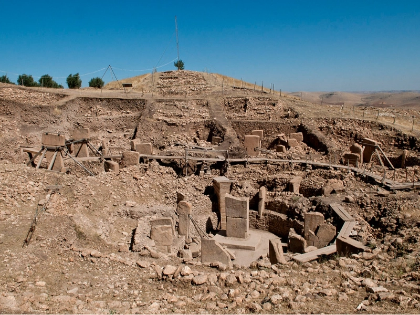
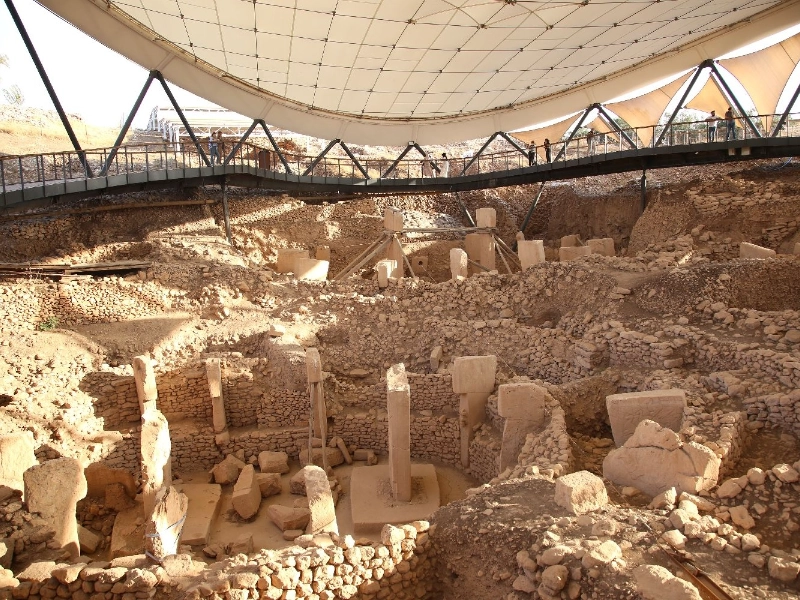
Given the era of time Göbekli Tepe was built in, the architectural elements of it are just amazing. Comprising many circular inclosures with diameters ranging from 10 to 30 metres, the site is These inclosures are thought to have been constructed over several millennia; the oldest buildings go back to the 10th millennium BCE. The intricacy and scope of these buildings subvert our assumptions about the capacity of prehistoric communities.
Massive T-shaped pillars, some weighing as much as 10 tonnes and rising to heights of 5.5 metres, define every inclosure. Two more major core pillars surround lesser ones in a circular arrangement. These monoliths have a particularly interesting T-shape as their apparent design choice seems to be intentional rather than a functional need. With the horizontal portion standing for the head and the vertical shaft for the torso, some scholars have proposed that the T-shape might show stylised human beings.
The exquisite decorations on these pillars really distinguishes Göbekli Tepe. Bas-relieve images of a great variety of animals—including lions, bulls, boars, foxes, gazelles, and many bird species adorn the stone surfaces. These remarkably accurate and deft carvings show a degree of artistic expertise not found in hunter-gatherer societies. Apart from animal representations, the pillars also have abstract symbols and geometric patterns that suggest a sophisticated system of communication or symbolism whose interpretation seems elusive to contemporary scholars.
Göbekli Tepe's layout is similarly intriguing. The way the circular inclosures are set points to deliberate design and maybe astronomical alignment. With certain buildings oriented to observe celestial phenomena, some scholars have suggested that the site might have been an early observatory. If this theory is true, it would suggest that the builders of the site had a sophisticated awareness of astronomy, therefore casting doubt on our impressions of prehistoric knowledge and capacity.
The evidence of deliberate burial in Göbekli Tepe's construction adds still another fascinating feature. Every inclosure, having been in use for several millennia, was purposefully buried and loaded with trash. Though hardly witnessed on such a large scale, Göbekli Tepe's "closing" procedure is not unusual. The motives behind this burial remain unknown; ideas range from ceremonial closure to environmental protection.
Moreover remarkable are the building methods used at Göbekli Tepe. Without metal tools or the wheel—both of which had not yet been invented—the builders mined, cut, and moved large stones over great distances. This technical mastery and logistical excellence of the prehistoric societies engaged in the building of the site reveal volumes about their organisational capacity and technological inventiveness.
New architectural elements discovered as excavations go forward help us to better grasp this complicated site. The finding of water management systems comprising channels and cisterns points to a sophisticated approach to resource management, therefore stressing the advanced character of the society that created Göbekli Tepe. The amazing design of this ancient site still questions our knowledge of prehistoric capacities and challenges us to rethink the chronology of human technical and social growth.