Advertisement
3. Unraveling the Mysteries: Theories and Interpretations
Advertisement
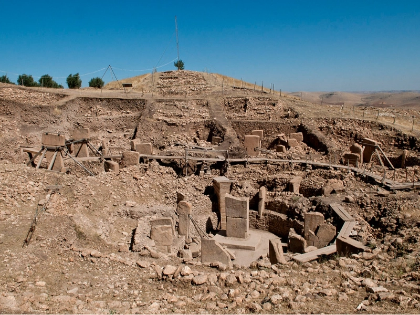
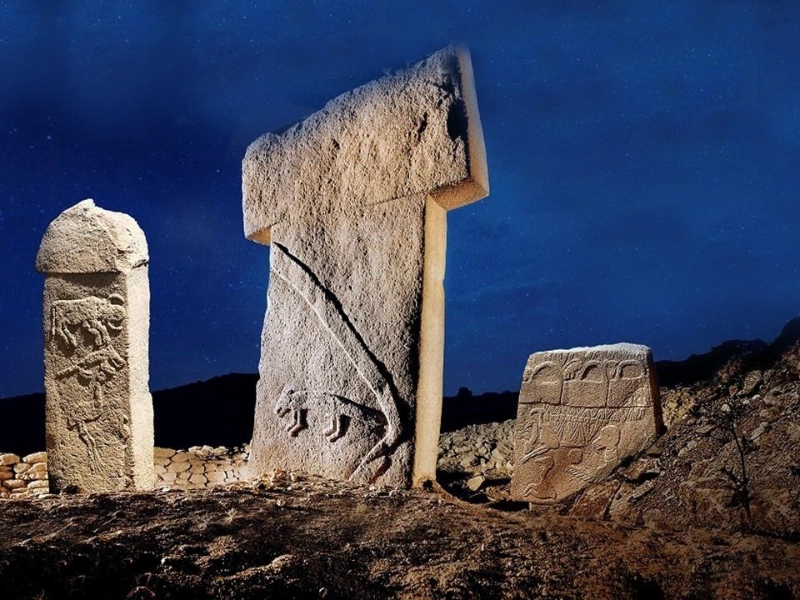
As scholars try to solve the riddles around Göbekli Tepe, a variety of theories and interpretations have evolved from their discovery. Göbekli Tepe's intended use and significance in prehistoric culture remain hotly contested issues among archaeologists, with several theories put up to explain it.
One of the most well-known hypotheses holds that Göbekli Tepe was a temple complex or religious haven. The complex carvings, the intentional pillar arrangement, and the seeming absence of nearby homes all hint to a site of ceremonial significance. This view is especially important since it questions the conventional wisdom that organised religion developed only following the advent of agriculture and stable societies. Should Göbekli Tepe be a religious centre, it would reverse the beginnings of coordinated prayer several millennia.
Still another fascinating view holds that Göbekli Tepe served as a hub for cultural interaction and knowledge transfer. The great variety of animal carvings—some of which show animals not native to the nearby area—suggests that the site would have been a gathering place for several groups to exchange knowledge about their surroundings and experiences. Far more broadly than first thought, this hypothesis depicts a complex network of communication and cultural interaction among hunter-gatherer tribes.
Some archaeologists have proposed that Göbekli Tepe was an ancient observatory. Certain buildings' alignment with celestial events, including solstices or equinoxes, has sparked conjecture on the astronomical understanding of their designers. Should this theory be valid, it would suggest a sophisticated knowledge of celestial movements and their significance in prehistoric societies, maybe for agricultural, ceremonial, or navigational needs.
According to a more contentious view, Göbekli Tepe might have been constructed by an advanced technologically capable lost society. Although certain popular groups have embraced this theory, orthodox archaeologists usually discount it because of the absence of supporting data. Still, it emphasises the significant influence Göbekli Tepe has had on our knowledge of prehistoric capacity, stretching the bounds of what we would have thought conceivable for past civilisations.
Furthermore generating many ideas is the intentional burial of the site following its period of use. According to some scholars, this deed was part of a ritual closure, maybe signifying the end of a given religious or cultural period. Others say it could have been a pragmatic way to protect the buildings from the elements or from competing groups. One of the several riddles of Göbekli Tepe still remains the actual motives for this burial.
Our knowledge of Göbekli Tepe changes as new analytical methods are discovered and excavations keep under progress. New options for interpretation have been opened by recent investigations employing advanced imaging technology revealing hidden structures and patterns not seen to the unaided eye. While study of organic residues is revealing information about the plants and animals that were present, genetic tests of human remains discovered nearby help to clarify the populations that might have created and used the site.
The continuous study at Göbekli Tepe reminds us of the dynamic character of archaeology and the importance of always changing our perspective of the past. In a never-ending process of scientific investigation, theories are revised, challenged, or abandoned as fresh data surface. Both experts and the general public are still enthralled with the riddles of Göbekli Tepe, which act as a potent reminder of the intricacy and intellect of our ancient forebears.