Advertisement
4. Göbekli Tepe's Impact on Archaeological Theories
Advertisement
The finding of Göbekli Tepe has had a significant influence on archaeological ideas since it questions accepted wisdom regarding the emergence of human civilisation and forces a review of the chronology of cultural development. This historic location has evolved into a catalyst for fresh ideas in archaeology, anthropology, and allied disciplines, therefore generating discussions about our knowledge of prehistory.
Göbekli Tepe has had among its most important effects on ideas about the change from hunter-gatherer societies to agricultural communities. It was conventional wisdom that the evolution of agriculture was necessary for the birth of sophisticated societies able of massive building. But Göbekli Tepe, which suggests that hunter-gatherer tribes were able of far more sophisticated organisation and cooperation than formerly believed, dates at least a millennium before the arrival of agriculture in the area. This realisation has caused one to rethink the elements of social complexity as well as the part ideology and ritual play in the evolution of ancient civilisations.
The website has also questioned accepted ideas on the beginnings of organised religion. Before Göbekli Tepe was found, it was generally believed that established agricultural life produced religious institutions, therefore supporting social hierarchies and power domination. The presence of what seems to be a large ritual complex constructed by hunter-gatherers implies that rather than being a result of the change to settled life, organised religious or spiritual practices may have been absolutely vital in the shift. This has resulted in fresh ideas about how common beliefs and practices could promote social cohesiveness and cooperation among prehistoric societies.
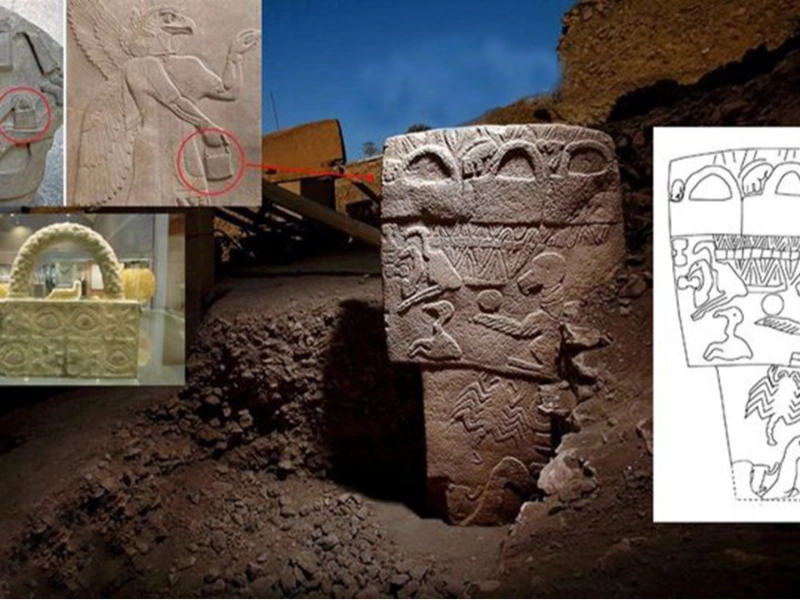
Göbekli Tepe has also challenged archaeologists' presumptions about the technological capacity of past civilisations. The stonework's accuracy, the size of the construction, and the sophisticated iconography all hint to a degree of talent and organisation until unheard of in hunter-gatherer societies. This has caused other prehistoric sites and relics to be reassessed as experts are now more receptive to the potential of sophisticated accomplishments in early human history.
The influence of the site reaches even to hypotheses of prehistoric trade and cultural interaction. Materials and images from far-off areas point to a network of long-distance links substantially more vast than once thought for this age. This has spawned fresh views on the mobility of ancient populations and the global dissemination of concepts and technologies.
Göbekli Tepe has also affected ideas on the growth of abstraction and symbolism in human development. The site's intricate iconography—including stylised depictions and abstract symbols—suggests a capacity for symbolic thinking considerably earlier than would have been assumed. This affects our knowledge of the evolution of human cognition and the sources of art and written communication as well.
The intentional burying of the site has spawned fresh ideas on memory and the handling of holy sites in archaic societies. The act of purposefully covering the place questions our knowledge of how ancient civilisations connected to their history and starts discussions on the cyclical character of ritual and the idea of rebirth in archaic belief systems.
Beyond the Neolithic era, Göbekli Tepe influences archaeological hypotheses. It has spurred academics to reevaluate sites from different eras and areas with fresh eyes, searching for perhaps missed indications of complexity and intelligence. This has resulted in fresh readings of other archaeological sites and a wider realisation of the possibility for sophisticated cultural evolution in prehistoric societies.
New evidence produced by the continuous excavations at Göbekli Tepe guarantees that its influence on archaeological theories stays dynamic and changing. Our knowledge of this amazing site and its position in human history keeps developing as fresh discoveries are made and new analytical methods are developed. Göbekli Tepe reminds us strongly of the possibility for revolutionary findings to transform our knowledge of the past and the need of keeping open to fresh ideas and interpretations in the area of archaeology.