Advertisement
6. Göbekli Tepe and the Origins of Agriculture
Advertisement
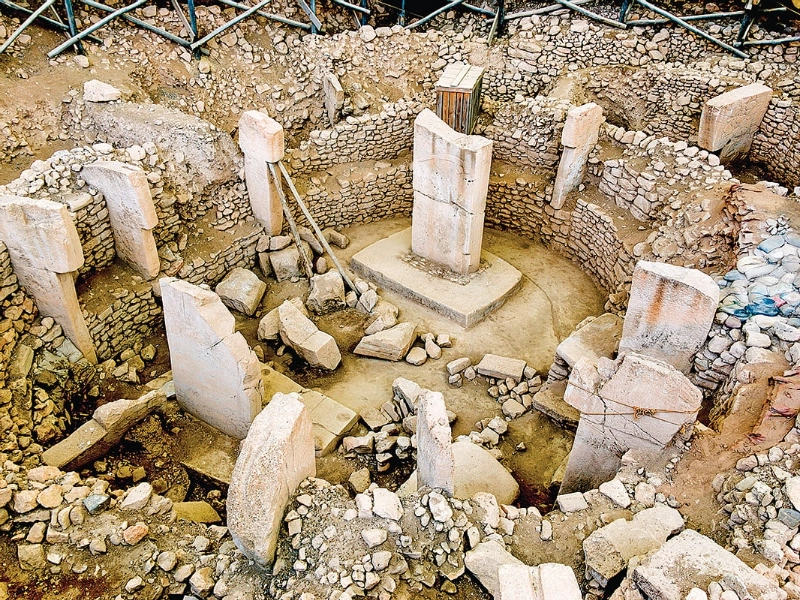
The discovery of Göbekli Tepe has fundamentally changed our knowledge of the beginnings of agriculture by disproving accepted wisdom on the change from hunter-gatherer societies to established agricultural groups. It was conventional wisdom that the evolution of agriculture was necessary for the birth of sophisticated societies able of massive construction. But Göbekli Tepe, with its large stone constructions and complex sculptures, dates at least a millennium before agricultural development in the area.
Researchers have been prompted by this historical disparity to create fresh ideas regarding the interaction between societal complexity and agricultural growth. Some archaeologists today argue that rather than being a result of the shift to agriculture, the building of massive monuments like Göbekli Tepe may have actually helped to bring about it. According to the notion, research with plant cultivation and animal domestication may have been driven by the necessity to support sizable groups of workers for protracted periods during the building and use of the site.
Göbekli Tepe's site in the Fertile Crescent, sometimes seen as the cradle of agriculture, lends still another level of relevance to this debate. The site is in a region abundant in wild grains and game, which would have supplied the means required to maintain the population engaged in its building. According to certain studies, the ceremonies and meetings connected with Göbekli Tepe would have attracted different populations of hunter-gatherers, therefore enabling the sharing of knowledge on plants and animals that finally resulted in agricultural methods.
Examining the plant remains discovered at the site has shown signs of wild grain processing, implying that the people were highly utilising the local resources. This great consumption of wild plants could indicate a step between full-scale agriculture and hunting-gathering. This theory is strengthened even more by the existence of grinding stones and other instruments connected with plant processing.
Furthermore offering clues on the link between the site and the evolution of animal domestication are the animal bones discovered at Göbekli Tepe. Although most of the remains are from wild animals, some researchers find indications of selective hunting methods that would be considered early stages of animal control. The ultimate domestication of some animals may have resulted from their symbolic significance as shown by their great frequency in the artwork of the site.
The social structure needed to establish and preserve Göbekli Tepe might have produced the environment fit for agricultural growth. More methodical food production approaches could have been encouraged by the necessity of a consistent food supply to support major events and building projects. Furthermore, the symbolic and ceremonial elements of the site could have helped to alter opinions of the human interaction with the environment, therefore enabling the shift to a more controlled method to food supplies.
New data that clarifies the intricate link between this ancient monument and the beginnings of agriculture surfaces as excavations at Göbekli Tepe unfold. Further study on ancient plant and animal DNA as well as sophisticated study of organic wastes discovered at the site promises to offer even more precise understanding of the food habits and resource management techniques of her creators.
Göbekli Tepe has consequences for our knowledge of agricultural beginnings that go much beyond the site itself. It has spurred studies of other prehistoric sites around the globe in quest of proof of sophisticated social organisation predating agriculture. This fresh viewpoint questions the conventional wisdom on human development and proposes a more complex picture of the interactions of social, cultural, and economic elements in the evolution of early civilisations.